
Report

Sri Venkateswara Swamy Temple, Tirumala

Tirupati, Chittoor, Andhra Pradesh

View photos
Temples / Sri Venkateswara Swamy Temple, Tirumala

Sri Venkateswara Swamy Temple, Tirumala Overview

Tirumala is a hill town in Tirupati district, Andhra Pradesh, situated at an elevation of about 980 metres within the Seshachalam range. The Sri Venkateswara Swamy Temple, its principal shrine, is dedicated to Lord Venkateswara — worshipped as an avatar of Vishnu who is believed by devotees to reside here in his full, undiminished form. This belief has earned Tirumala the title "Bhuloka Vaikuntha," or Vaikuntha on Earth, within Vaishnava tradition.

The temple holds a place of paramount importance among Hindu pilgrimage sites, particularly for the Srivaishnava and broader Vaishnava community. According to Encyclopaedia Britannica, it is recognised as the most visited and wealthiest Hindu temple in the world, receiving offerings from millions of devotees annually. For pilgrims, a visit to Tirumala is considered a lifelong aspiration; many undertake vratams (vows), tonsure their hair as an offering, and endure long queues for darshan as expressions of devotion.

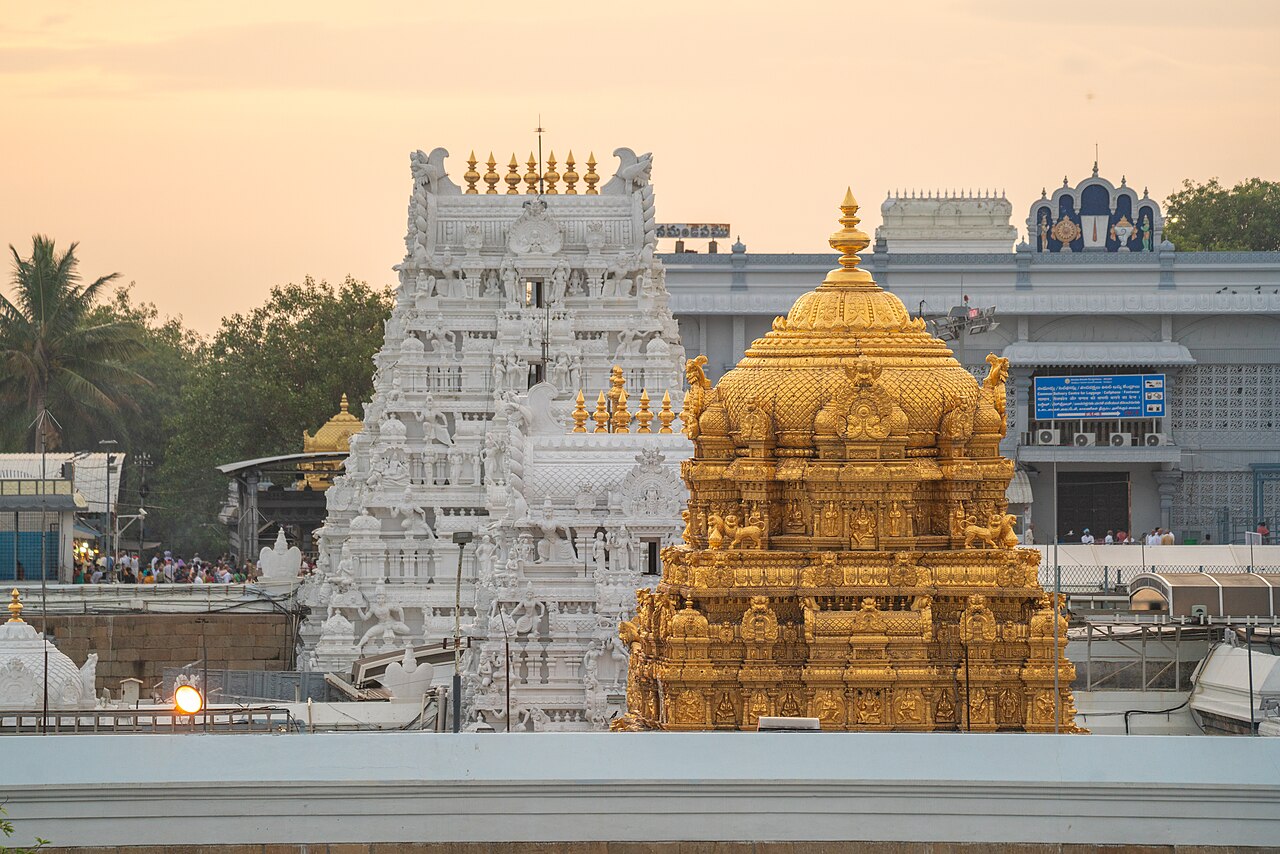
Historically, the temple has been continuously patronised for over a thousand years. Epigraphic evidence traces endowments back to the 10th century CE, with successive dynasties — the Pallavas, Cholas, the Reddi kings, and later the Vijayanagara emperors — contributing richly to its wealth, rituals, and physical expansion. Emperor Krishnadevaraya's donations in the 16th century remain especially well documented. This layered patronage is reflected in the temple's architecture, which displays classical Dravidian temple design elements built up over several centuries, including a gold-plated vimana over the sanctum, sculpted mandapas, and multiple prakarams (enclosures).


Culturally, the temple is inseparable from the town of Tirumala itself, which functions as a strictly vegetarian pilgrim township with its own transport, accommodation, and prasadam (offering) systems built around temple visits. The temple's laddu prasadam is one of its most recognised traditions. The most significant annual event is the Srivari Brahmotsavam, a multi-day festival held in the Hindu month of Ashvija (typically September or October), along with other observances such as Vaikunta Ekadashi and Rathasapthami that draw large numbers of devotees.


Architecturally and spiritually, the temple's sanctum houses the principal deity in the Ananda Nilayam, a gold-covered inner shrine considered the heart of the complex. Devotees typically join the Sarva Darshan (general darshan) queue, though the temple also offers time-bound paid darshans and a range of sevas (ritual services) for those wishing to sponsor specific worship. Given the volume of pilgrim traffic, visitors are advised to check current darshan timings, queue status, and accommodation availability on the official TTD channels before planning a trip, as these are actively managed and can change with little notice, especially during festivals.

Temple Legend:

According to temple tradition, the presiding deity of Tirumala, Lord Venkateswara, descended to earth in the Kali Yuga to guide and protect humanity. The Varaha Purana describes Venkatadri, the hill on which the temple stands, as a fragment of Mount Meru said to have been carried to earth by Garuda; the surrounding seven peaks are traditionally likened to the seven hoods of Adishesha, the serpent on which Vishnu reclines, giving Tirumala its epithet "the Temple of Seven Hills."


A central legend recounted in local tradition and Puranic literature concerns the Lord's marriage to Padmavati, a princess associated with the region, in an episode devotees regard as parallel to Vishnu's eternal union with Lakshmi. To meet the expenses of this celestial wedding, tradition holds that the Lord borrowed wealth from Kubera, the god of riches, a debt devotees believe is still being repaid through the offerings — including the ritual tonsuring of hair — made at the temple to this day. Devotees also traditionally visit the nearby Varahaswami shrine, associated with Vishnu's Varaha (boar) avatar, before proceeding to the main sanctum, in keeping with local custom that regards Varahaswami as the original guardian deity of the hill.

These traditions are foundational to the temple's religious identity and are treated by the temple and its devotees as matters of faith rather than historical record. Deities in the Temple  Lord Venkateswara (Dhruva Beram)  — The principal, immovable deity of the temple, an approximately 8-foot stone image housed in the Garbhagriha (sanctum sanctorum) and worshipped as a form of Vishnu.  Sridevi and Bhudevi  — The consort goddesses (forms of Lakshmi and Bhudevi) flanking the main deity.  Malayappa Swami — The processional (utsava) deity taken out for festivals and public ceremonies, accompanied by Sridevi and Bhudevi.  Bhoga Srinivasa  — A smaller silver processional deity used in the Lord's daily nocturnal rituals. Ugra Srinivasa and Koluvu Srinivasa — Deities associated with specific ritual functions within the sanctum's daily worship routine. Sri Rama, Sita, Lakshmana, and Krishna with Rukmini Subsidiary deities installed within the temple premises, worshipped as part of the wider ritual calendar.       Temple Administration   The Sri Venkateswara Swamy Temple is administered by the Tirumala Tirupati Devasthanams (TTD), an independent trust constituted by the Government of Andhra Pradesh. TTD traces its formal origin to the TTD Act of 1933, following the earlier Mahant (hereditary religious head) administration of the Hathiramji Mutt, which had managed the temple since 1843. The trust's structure was subsequently revised by the Madras Hindu Religious and Charitable Endowments Act (1951) and the present TTD Act of 1979, under which a Board of Trustees, appointed by the Andhra Pradesh state government, oversees temple affairs, alongside an Executive Officer responsible for day-to-day administration. TTD manages all major visitor-facing functions at Tirumala, including darshan and seva ticketing, queue and crowd management, accommodation, free transport services, prasadam (laddu) distribution, and the temple's extensive charitable, educational, and publication activities. All bookings and official announcements are issued through TTD's official channels — tirumala.org and ttdevasthanams.ap.gov.in.
Discover more

Temple Facts

Three fascinating things you may not know about Sri Venkateswara Swamy Temple, Tirumala.

Temple Fact

Annadanam

this much of Peoples Ate Every Day

Temple Fact

Gopuram Height

this much of Gopuram Height 

Temple Fact

Campus Area

this much of campus area it has

Main DeityLord Venkateswara (also worshipped as Balaji, Srinivasa, and Govinda) regarded as an avatar of Lord Vishnu.
TimingsSuprabhatam (waking ritual) 2:30 AM – 3:00 AM Thomala Seva 3:30 AM – 4:00 AM Archana / Sahasranama 4:15 AM – 5:00 AM Visesha Puja 5:30 AM – 6:30 AM Sarva Darshan (general darshan) Approx. 7:00 AM – 7:00 PM (day session) Evening rituals (Kalyanotsavam, Arjitha sevas, etc.) Approx. 12:00 PM – 5:00 PM Sahasra Deepalankarana Seva Approx. 5:30 PM – 6:30 PM Sarva Darshan (night session) Approx. 8:00 PM – 12:30 AM
Entry FeeFree
Dress CodeMen: Dhoti with shirt/upper cloth, or Kurta-Pyjama; traditional attire such as dhoti and uttariyam is appropriate. Women: Saree with blouse, half-saree with blouse, or Chudidar/Pyjama with dupatta.

Gallery

History

The earliest verifiable evidence of organised worship at Tirumala dates to the 9th–10th centuries CE. Inscriptions record that in 966 CE, the Pallava queen Samavai (Perundevi) endowed the temple with jewels and land for festival funding — among the earliest documented endowments. Over the following centuries, the temple received continuous patronage from a succession of South Indian dynasties: the Pallavas (9th century), the Cholas (10th century onward), the Reddi kings of Kondaveedu (12th–13th centuries), and the Vijayanagara emperors (14th–16th centuries), under whom the temple gained much of its present wealth, scale, and ritual structure.


The Vijayanagara period was particularly significant. In 1417 CE, the noble Madhavadasa constructed the Tirumamani Mandapam, a sixteen-pillared hall within the temple. In 1517 CE, Emperor Krishnadevaraya made substantial donations of gold and jewels, which are traditionally associated with the gilding of the Ananda Nilayam, the shrine directly above the sanctum. Around 1535 CE, temple functionary Pedda Tirumalacharya is recorded as having renovated the temple tank and the Adivaraha shrine.


The philosopher-saint Ramanuja is traditionally said to have visited the temple on three occasions, reorganising temple rituals according to the Vaikhanasa Agama tradition still followed today, and establishing the Tirupati Jeeyar Mutt around 1119 CE to institutionalise temple service.


Following the decline of the Vijayanagara empire after 1656, control of the region passed successively to the Golconda Sultanate, briefly to French forces, and then to the Nawab of the Carnatic, until the East India Company assumed administrative oversight in the early 19th century. Regulation VII of 1817 formally placed temple management under the Company's Board of Revenue, and in 1821, a set of administrative rules known as "Bruce's Code" was drawn up for temple governance.


From 1843, administration passed to the Mahants of the Hathiramji Mutt, who governed temple affairs for roughly ninety years across six generations, until the Tirumala Tirupati Devasthanams (TTD) was formally constituted under the TTD Act of 1933. Subsequent legislation — the Madras Hindu Religious and Charitable Endowments Act of 1951, direct Andhra Pradesh state oversight from 1966, and the present TTD Act of 1979 — shaped the modern trust-based administrative structure that governs the temple today.


The temple's antiquity is further attested by roughly 640 stone inscriptions found across the complex, in Sanskrit, Tamil, Telugu, and Kannada, along with a large collection of copper plates inscribed with devotional compositions (sankirtanas) attributed to the 15th-century saint-poet Annamacharya, preserved within the temple.

Mythology

According to Hindu tradition, Lord Venkateswara is an avatar of Vishnu who descended to Tirumala in the Kali Yuga to protect and guide humanity when direct access to the higher worlds became difficult for ordinary devotees. The hill itself is regarded as sacred: the Varaha Purana describes Venkatadri as a portion of Mount Meru, believed to have been transported to earth by Garuda, Vishnu's celestial vehicle. The seven hills surrounding the temple — including Seshadri, Neeladri, Garudadri, Anjanadri, Vrushabadri, Narayanadri, and Venkatadri — are traditionally identified with the seven hoods of Adishesha, the divine serpent associated with Vishnu, giving the temple its popular name, "Temple of the Seven Hills."


Central to temple tradition is the legend of Sri Venkateswara's marriage to Padmavati, a princess devotees regard as an incarnation of Bhudevi (and, by extension, connected to Lakshmi). Temple tradition holds that to meet the expenses of this celestial wedding, the Lord borrowed a large sum from Kubera, the god of wealth, on the understanding that the loan — with interest — would be repaid by devotees until the end of the Kali Yuga. Devotees believe this is the origin of the practice of offering hair (tonsure) and monetary donations at the temple, seen as acts of devotion that also symbolically assist in repaying this divine debt.


Local tradition also holds that Vishnu, in his Varaha (boar) avatar, resided on this hill even before Venkateswara's arrival, which is why devotees customarily pay respects at the nearby Varahaswami shrine before proceeding to the main sanctum — a sequence believed to make the darshan complete.


Among the temple's major traditional observances, Vaikunta Ekadashi holds special mythological importance: devotees believe that passing through the temple's Vaikunta Dwaram (gate of Vaikuntha) on this day grants the merit of entry into Vishnu's heavenly abode. The main deity within the sanctum is traditionally regarded by devotees as swayambhu (self-manifested) rather than consecrated by human hands, which is considered central to the temple's unique sanctity.


Architecture

The Sri Venkateswara Swamy Temple is built in the Dravidian temple architectural tradition, with its present form the result of continuous construction and embellishment across many centuries by successive ruling dynasties, including the Pallavas, Cholas, Pandyas, and Vijayanagara emperors.
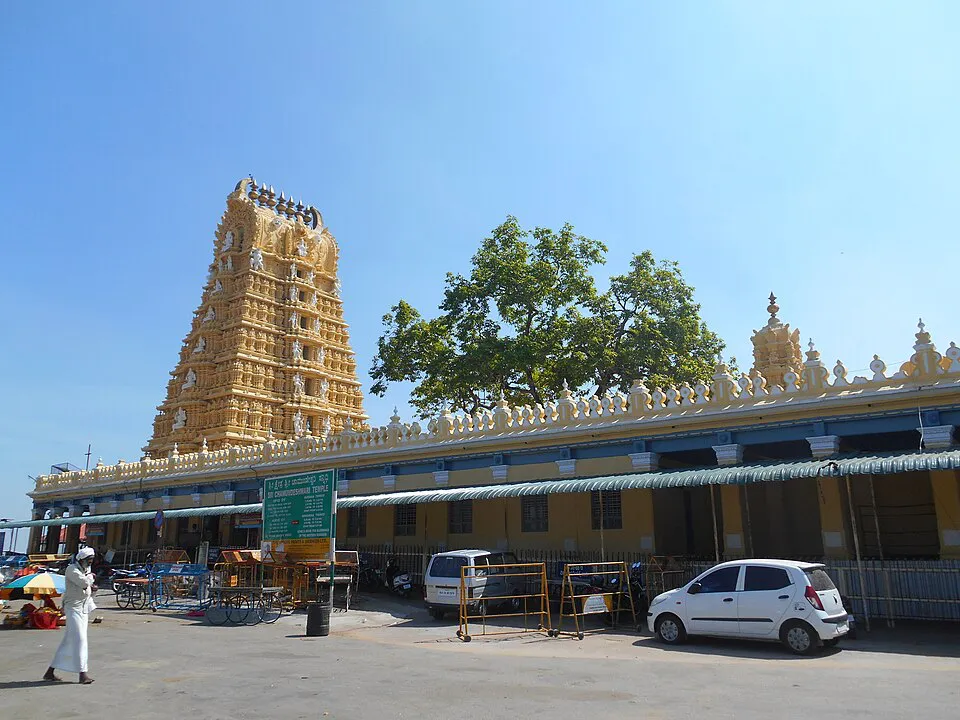
The temple's main entrance, the Maha Dwaram, is a gopuram-style gateway rising to about 50 feet, flanked by panchaloha (five-metal) images of Sankhanidhi and Padmanidhi, guardian figures representing the treasures of Kubera. Beyond the entrance lie a series of pillared mandapas (halls) used for different ritual purposes, including the Tirumamani Mandapam, a sixteen-pillared hall built in 1417 CE that houses an inscribed temple bell; the Ranga Mandapam; and the Kalyana Mandapam, associated with the temple's yagashala (ritual fire hall). The Aina Mahal, or "Hall of Mirrors," is a later addition noted for its reflective interior surfaces.
At the heart of the temple lies the Garbhagriha (sanctum sanctorum), a double-walled chamber whose earliest surviving portions are dated to around the 8th–9th centuries CE, bearing inscriptions from as early as 966–1013 CE. It houses the principal image of Lord Venkateswara. Directly above the sanctum rises the Ananda Nilayam Vimana, a gold-plated, three-tiered tower considered the visual and spiritual crown of the temple; its gold-plated kalasha (crowning finial) is traditionally associated with a 13th-century donation by the Pandya king Jatavarman Sundara Pandya I, with further embellishment funded by Vijayanagara king Krishnadevaraya in the 16th century.
The temple complex is enclosed within multiple concentric prakarams (compound walls), which create circumambulatory paths for devotees, including the Sampangi Pradakshinam (outer path) and the Vimana Pradakshinam (inner path around the sanctum). Sculptural and decorative work throughout the complex — carved pillars, stone friezes, and metal icons — reflects the artistic conventions of the various periods that contributed to the temple's construction.
To the north of the temple lies the Swami Pushkarini, a temple tank spanning over 1.5 acres, which devotees traditionally regard as sacred and associated with the temple's mythological origins. The temple complex as a whole preserves around 640 inscriptions in multiple South Indian languages, making it an important source for regional epigraphic and art-historical study, in addition to its living function as an active place of worship.

Darshans

Available darshan options and visitor guidance for this temple.

Sarva Darshan

The standard, free darshan available to all pilgrims on a first-come, first-served queue basis. Most devotees avail this darshan; queue duration can range from a few hours to over 18 hours depending on the season and rush.
Price: Free Timings: Continuous, in two daily sessions (approx. 7:00 AM – 7:00 PM and 8:00 PM – 12:30 AM; timing varies by day) Online Booking: No

Slotted Sarva Darshan (Free Token Darshan)

A free, token-based system introduced to manage crowding, allowing pilgrims to receive a fixed darshan slot in advance rather than joining an open queue.
Timings: Token-based, allotted at counters in Tirupati for a specific slot the following day Online Booking: No

Divya Darshan

Available to pilgrims who trek to Tirumala on foot via the Srivari Mettu or Alipiri footpaths.
Price: Free Timings: Verify with TTD Online Booking: No

Special Entry Darshan (Seeghra Darshanam)

A paid, quicker-access darshan introduced in 2009, bookable online in advance through the official TTD portal.
Price: ₹300 per person Online Booking: No

Special Darshan for Senior Citizens / Persons with Disabilities

A separate, shorter queue facility for elderly and physically challenged devotees.
Timings: Verify with TTD Online Booking: No

SRIVANI Trust VIP Break Darshan

A donation-linked break darshan facility offered through the SRIVANI Trust, typically the fastest paid darshan option available without a recommendation letter.
Timings: Verify with TTD Online Booking: No

NRI Darshan

A darshan facility for Non-Resident Indian devotees, bookable at a designated counter with valid documentation.
Price: Verify current price with TTD Timings: Verify with TTD Online Booking: No

Arjitha seva-linked darshans (Kalyanotsavam, Thomala Seva, etc.)

Arjitha seva-linked darshans (Kalyanotsavam, Thomala Seva, etc.) also include darshan access as part of the seva; see Sevas section below.
Online Booking: No

Sevas

Temple sevas, poojas, and booking information entered by the Templeisure team.

Suprabhatam

The pre-dawn ritual that ceremonially "awakens" the deity, considered the first and most sacred ritual of the day.
Price: Verify with TTD Timings: Approx. 2:30 AM – 3:00 AM Booking Required: No

Thomala Seva

A daily ritual involving the offering of fragrant flower garlands to the deity.
Price: Verify with TTD Timings: 3:30 AM – 4:00 AM Booking Required: No

Archana

Chanting of the deity's sacred names (Sahasranama) as an offering.
Price: Verify with TTD Timings: 4:15 AM – 5:00 AM Booking Required: No

Ashtadala Pada Padmaradhana

Worship offered specifically to the lotus feet of the deity.
Price: Verify with TTD Timings: Tuesdays Booking Required: No

Thiruppavada Seva

A special food-offering seva performed weekly.
Price: Verify with TTD Timings: Thursdays Booking Required: No

Abhishekam / Vastralankarana Seva

The sacred bathing (abhishekam) of the utsava deity, followed by fresh vastram (garment) adornment — one of the most sought-after Arjitha Sevas.
Price: Verify with TTD Timings: Fridays Booking Required: No

Vasanthotsavam

The "Festival of Spring," a seasonal seva performed for the well-being of the deity.
Price: Verify with TTD Timings: March/April, 3 days Booking Required: No

Teppotsavam

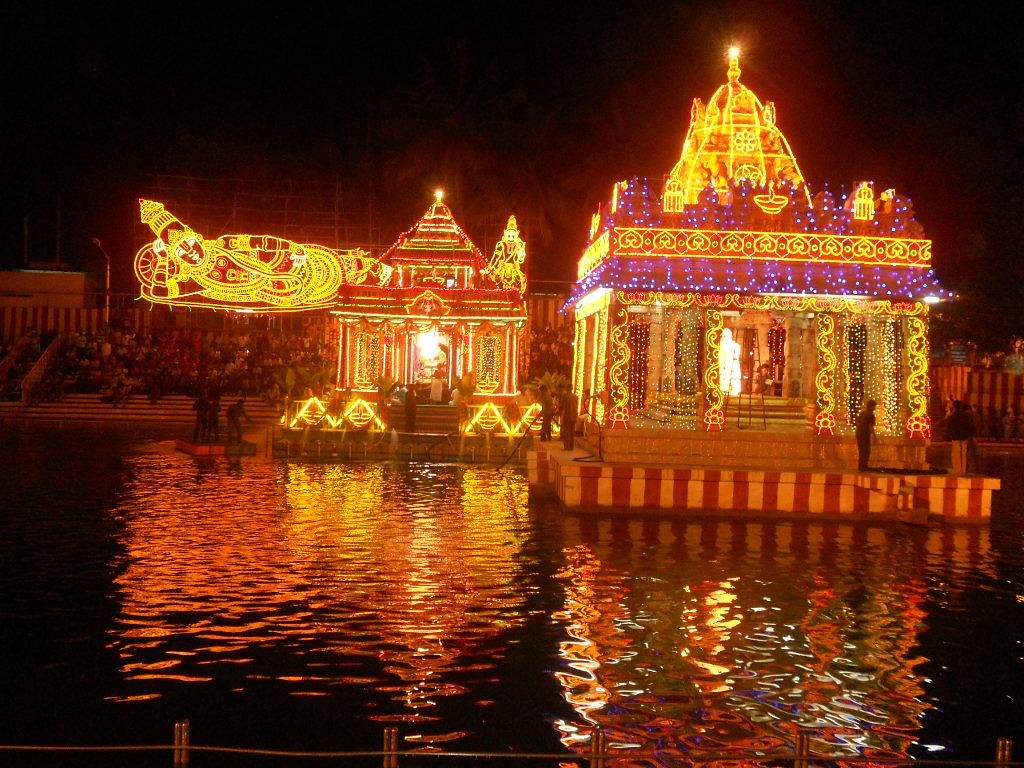
The float festival, in which processional deities are taken around the Swami Pushkarini tank on a decorated float.
Price: Verify with TTD Timings: Around the time of Brahmotsavam, 5 days Booking Required: No

Pavitrotsavam

An atonement ritual performed to rectify any ritual lapses that may have occurred during the year's worship.
Price: Verify with TTD Timings: August, 3 days Booking Required: No

Festivals & Utsavams

Important festival and utsavam information for planning a temple visit.

Srivari Brahmotsavam

The temple's most important annual festival, featuring daily processions of the utsava deity on different vahanas (ceremonial vehicles) including the Garuda Vahanam, which draws especially large crowds. Exact dates are announced by TTD each year and should be confirmed closer to the date.
Date / Month: Typically Ashvija masam (September/October, per the Hindu lunar calendar); exact dates vary each year Duration: 9 Days (per official/TTD-documented tradition) Type: Annual

Vaikunta Ekadashi

Considered the most sacred day of the year at the temple; devotees believe passing through the Vaikunta Dwaram on this day confers special spiritual merit.
Date / Month: Dhanurmasam (December/January) Duration: Primarily 1 day (with an associated multi-day festival period) Type: Annual

Rathasapthami

A major festival in which the processional deity is taken in procession on seven different vahanas through the course of the day.
Date / Month: Magha masam (typically February) Duration: 1 day Type: Annual

Transportation

Nearby transport points and travel notes for reaching this temple.

Tirupati bus facilities / TTD bus services to Tirumala

Type: Bus Station

Tirupati Railway Station

Type: Railway Station Distance: 26 km from Tirumala
Open Map

Tirupati International Airport

Type: Airport Distance: 15 km from Tirupati
Open Map

Nearby Leisure, Food & Restaurants

Nearby Leisure

No leisure mappings published yet.

Where To Eat

No food or restaurant mappings published yet.

YouTube Videos

Tirumala Temple Documentary

Visit Telugu Travel video

Map

S Mada St, Tirumala, Tirupati, Andhra Pradesh 517504